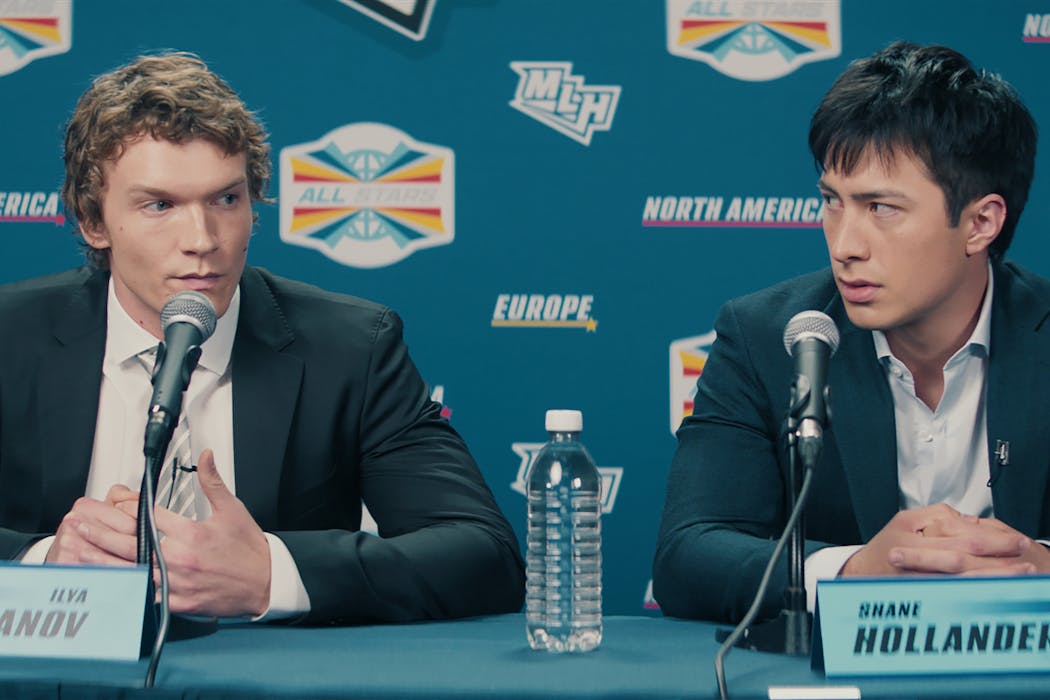
Heated Rivalry, the Bell Media-produced Canadian gay hockey romance based on the novel by Rachel Reid, has taken the world by storm. The series stars Hudson Williams as Shane Hollander, a Japanese Canadian hockey player for the Montréal Metros, and Connor Storrie as Ilya Rozanov, a Russian hockey player for the Boston Raiders.
With much of the series was filmed in Guelph, Ontario and other Canadian locations, the series highlights both Canadian hockey and queer representation and desires.
Heated Rivalry explores the growing sexual tension and eventual romance between Hollander and Rozanov as they navigate the highly masculinized and heteronormative social pressures of playing in a professional hockey league.
While the series has become a huge audience success and received largely positive critical evaluations of its acting, production and characterization, it has gained widespread attention for its representation of queer romance, particularly gay sports romance.
The show has also received media commentary for its large following of women who are fans of the show and its actors. Many have been debating and discussing the show on social media.
Given the current climate of anti-LGBTQ legislation and increased political and social transphobia and homophobia, Heated Rivalry could signal crucial queer representation during a politically dangerous time.
Hockey’s culture of masculinity
Hockey is a very heteronormative and masculinized sport and continues to face serious issues related to sexual violence and racism — problems that have been widely reported on over the past several years.
In 2022, Hockey Canada faced numerous public controversies amid reports that it paid $8.9 million for sexual abuse settlements to 21 complainants since 1989.
Read more: High-profile sex assault cases — and their verdicts — have consequences for survivors seeking help
Research has also documented persistent racial inequities within Canadian hockey that fuel the erasure of Black Canadians’ contributions to the establishment of ice hockey in Canada, as well as historical and ongoing experiences with taunting, harassment and exclusion of racialized hockey players in Canadian hockey leagues.
Against this backdrop, Heated Rivalry offers a rare interruption to hockey’s normative culture, even as it remains constrained by many of the sport’s dominant values.
Visibility versus structural change
Whether Heated Rivalry will meaningfully impact the willingness or safety of professional players to come out is an open question. Currently, there are no openly queer hockey players in the National Hockey League.
Former Canadian hockey player Brock McGillis, who is often noted as one of the first out gay professional hockey players, has expressed skepticism. He has argued the show is “more likely to have an adverse effect on a player coming out.”
McGillis said that he enjoys the show while also explaining: “I don’t believe that many hockey bros are going to watch it. And I don’t think, if they are watching it, they’re talking about it positively.”
Meanwhile, the NHL has previously banned rainbow Pride coloured hockey stick tape. Given the popularity of Heated Rivalry, the NHL released a statement articulating its hope that the series will act as a “unique driver for creating new fans.”
Whether such symbolic gestures will translate into structural changes that address the ingrained homophobia within hockey remains to be seen.
Representation and intersectionality
Within my research, I analyze issues related to gender and sexuality, often particularly as it pertains to the experiences of gay and queer men.
For many gay men, navigating masculinity is complicated in terms of both in-group and out-group discrimination. It is not uncommon for white, muscular and masculine-presenting gay men to receive the most media attention and be positioned as highly desirable within gay men’s communities.
Heated Rivalry provides valuable representation for gay male romance and sexualities, but it also raises important questions about both its potential and its limitations.
Shane Hollander’s character gestures toward the intersections of race and sexuality through his experiences as an Asian hockey player, although this storyline could have been explored further in the series. Ilya Rozanov’s narrative, meanwhile, explores family-based and nationalistic homophobia through his background as a Russian-born queer man.
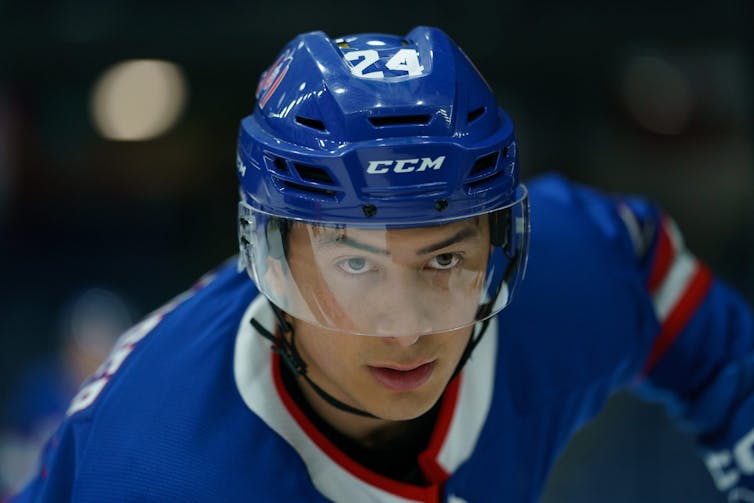
Although both characters benefit from financial and gender-based privileges that many LGBTQ people do not share, their experiences navigating identity and homophobia as it intersects with family, state-sanctioned homophobia and race and ethnicity, are meaningful for viewers.
However, much of the storyline still focuses on the experiences of two men who are traditionally attractive, fit and muscular, and masculine-presenting. This echoes much of the mainstream queer representation, which glorifies fit male bodies and gay gym cultures.
The limits of mainstream representation
Many mainstream representations of queer identities, such as the 2018 film Love Simon, fail to represent the nuances and complexities of multifaceted queer experiences and identities outside of white, masculine and upper-middle class norms.
Gay media platforms such as Grindr, the well-known gay hook-up app, are known for emphasizing fit bodies, muscular physiques and gym or beach selfies. These norms can lead to forms of discrimination or prejudice against app users who do not conform, as well as body dysmorphia and body image issues that disproportionately affect gay and queer men.
Gay men’s sexualities, dating and relationships are often shaped through shame and secrecy, fuelling tropes that gay men are unable to form healthy and meaningful long-term romantic relationships.
Much of Heated Rivalry emphasizes secrecy, shame and risk as the two main characters wrestle with their romantic feelings for each other. While this might reflect the realities many queer men face, positioning such experiences as normative risks reinforcing longstanding negative stereotypes.
Queer joy — and what’s still missing
Heated Rivalry’s creator and writer, Jacob Tierney — himself a gay writer, actor and producer — has emphasized that the end of the first season is intended to be more celebratory than earlier episodes.
“For these last two episodes,” he told journalist Philiana Ng, “you’re going to finally get the joy that we wanted from the beginning – just queer joy, pure happiness and sweetness and love and all that other good stuff.”

However, there has been controversy about the show’s stars’ and creator’s resistance towards publicly identifying the lead actors’ sexual orientations. Given the common practice of having straight and cisgender actors play queer and trans characters in film and media, questions regarding authenticity in LGBTQ representation continue.
It’s worth noting, however, that Heated Rivalry does feature openly queer performers. François Arnaud, who plays Scott Hunter, is openly bisexual, and trans actor Harrison Browne — a former professional hockey player — stars in a minor role.
Tierney has pushed back at questions about the main actors’ sexual orientations, saying “I don’t think there’s any reason to get into that stuff.” He noted that what matters is an actor’s enthusiasm and willingness to do the work, and questions about actors’ sexuality are legally off-limits in casting.
Advocates for casting queer actors in queer roles acknowledge that while respecting actors’ privacy is essential, choices can be made through the casting and production process to create a more inclusive industry.
Queer romance on the ice
Beyond questions of representation, Tierney has been clear about the show’s thematic focus. Highlighting the love story between the two main characters, he has noted how “a gay love story set in the world of hockey … is an act of rebellion” and that audiences “deserve to have a gay show that is sexy and horny and fun.”
Still, audiences deserve to have gay shows that are sexy, horny, fun and representative of a variety of lived experiences and bodies.
With Heated Rivalry renewed for a second season, whether the show “scores” in terms of shifting conversations about masculinity, sexuality and sport is still up in the air.

Adam Davies receives funding from the Social Sciences and Humanities Research Council.